
By Dennis Sadowski
Northeast Ohio has plenty of hidden treasures to explore, as we all know. One is the Ukrainian Museum-Archives in Cleveland’s Tremont neighborhood.
Housed in two buildings, the institution houses newspapers and magazines, photos, maps, cultural symbols such as pysanky (colorfully decorated eggs for Easter), and traditional garb that serve to inform visitors about Ukrainian history and culture.
The burgeoning archives, one of the largest outside of Ukraine, houses tens of thousands of historical documents, publications, correspondences and certificates that chronicle Ukrainian history in Europe and among the diaspora in Greater Cleveland and beyond.
Among the important artifacts available to view and study is a stamp collection that includes material dating to the mid-19th century.
Andrew Fedynsky, 79, museum-archives director, said the collection emerged from among the items that Ukrainians brought with them as they fled their homeland under Bolshevik and Nazi domination. In particular, Fedynsky credited Leonid Bachynsky, a onetime school headmaster, who arrived in Cleveland from a displaced persons camp in Europe after World War II with “treasures” that included books, newspapers, stamps and postcards from Ukraine.
The stamp collection exists in a series of albums and includes stamps, postal history and post cards showing Ukrainian scenes, everyday life and historical figures. The collection encompasses the first Ukrainian stamps issued in July 1918 through February 1922 as listed in the Scott Standard Postage Stamp Catalogue.
Ukraine formally was integrated into the Soviet Union in December 1922 as one of its founding republics.
The collection has a dozens of “Cinderella” stamps, adhesives that had no official postal purpose but depict Ukrainian themes. They were created by the diaspora to preserve Ukrainian history and raise money to support charitable and social causes. The Cinderellas are a valuable resource for anyone wanting to learn about efforts to preserve Ukrainian culture.
Modern material is among the museum’s holdings as well.
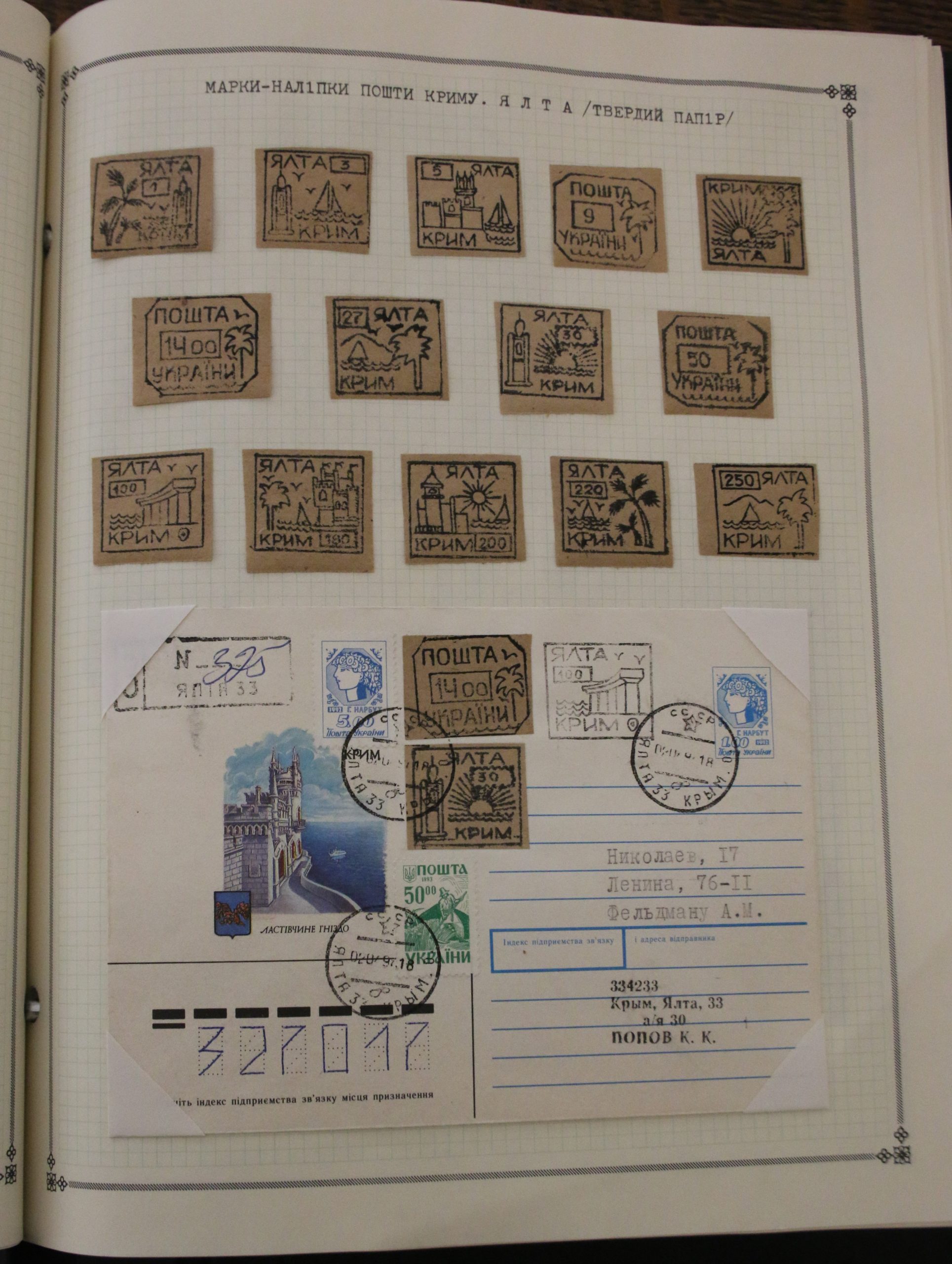
When Ukraine regained its independence in 1991 after the collapse of the Soviet Union, post offices were left with large stocks of Russian stamps. Being creative, local postal officials often overprinted the stamps with the Ukrainian trident symbol and Ukrainian monetary values. In some cases they printed their own local stamps. Thousands of simple, almost crude, designs emerged and are eagerly sought by collectors. They are treasure for philatelic researchers.
The holdings also include many of the colorful regularly issued stamps of the early 1990s from the emerging Ukrainian government.
Fedynsky, a former congressional staffer, said the institution also has a collection of coins, bank notes and currency that traces the 20th century Ukrainian economic story.
The museum dates to 1952 when Ukrainian immigrants in Cleveland decided to preserve important artifacts from their history. It originated in a room that had been used as a coal bin at a Ukrainian Orthodox church in Tremont. The Ukrainian community was centered in Tremont in the mid-20th century because of easy access to jobs at the steel mills and other industries in the nearby Flats.
As poverty overtook the Tremont neighborhood in the 1960s and 1970s Ukrainians moved to Parma and other Cleveland suburbs, leaving the museum’s future uncertain. With Ukrainian independence in 1991, there was renewed interest in preserving Ukrainian history and culture. Fedynsky was among those who spearheaded the effort to create a lasting institution by securing federal, state and foundation funding.
With its renewal, the museum has become a must-see stop for visiting Ukrainian scholars, researchers and government officials, Fedynsky said.
“We say we’re not just a Ukrainian museum. We’re an American museum,” he said.
Fedynsky himself is a Ukrainian refugee of sorts. He was born in 1947 in Innsbruck, Austria, to where his parents had fled Soviet oppression. The family immigrated to the U.S. when Fedynsky was 8 months old and soon made their way to Cleveland, where over the years he immersed himself in Ukrainian cultural and social organizations.
The Ukrainian Museum-Archives is open 10 a.m. to 4 p.m. Tuesday through Saturday. More information is online at www.umacleveland.org.
Dennis Sadowski can be reached at sadowski.dennis@gmail.com.