
By Dennis Sadowski
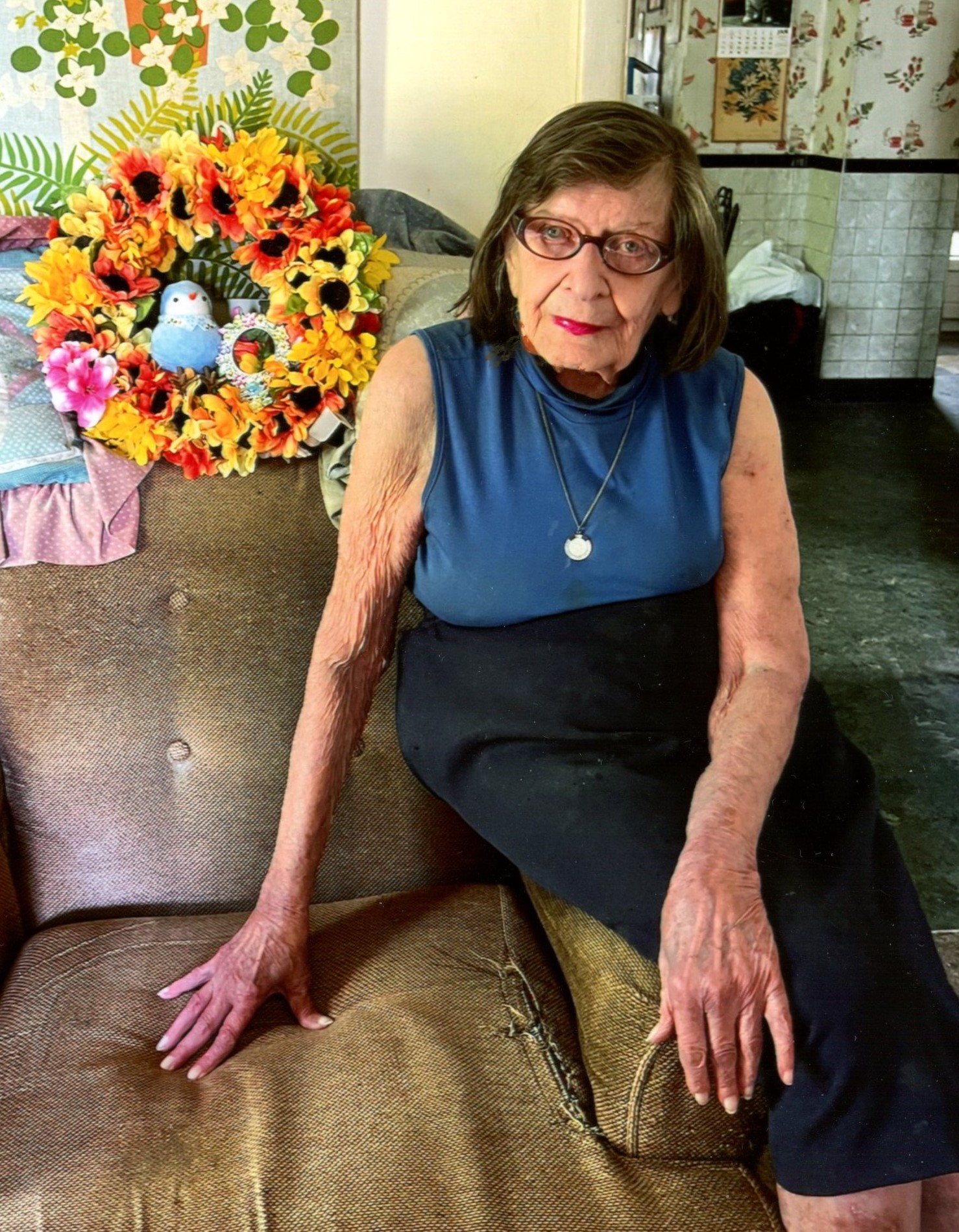
Clevelander Bernice Kochan never set out to be a stamp designer. But in 1969 she was at the top of the stamp designing world. Two of her creations were selected for commemorative stamps that year when the first class letter rate was 6 cents. Her work also appeared on a block of four festive Christmas seals that mailers added to their holiday mail. Kochan, now 99, recalled that all three works were chosen in competitions.
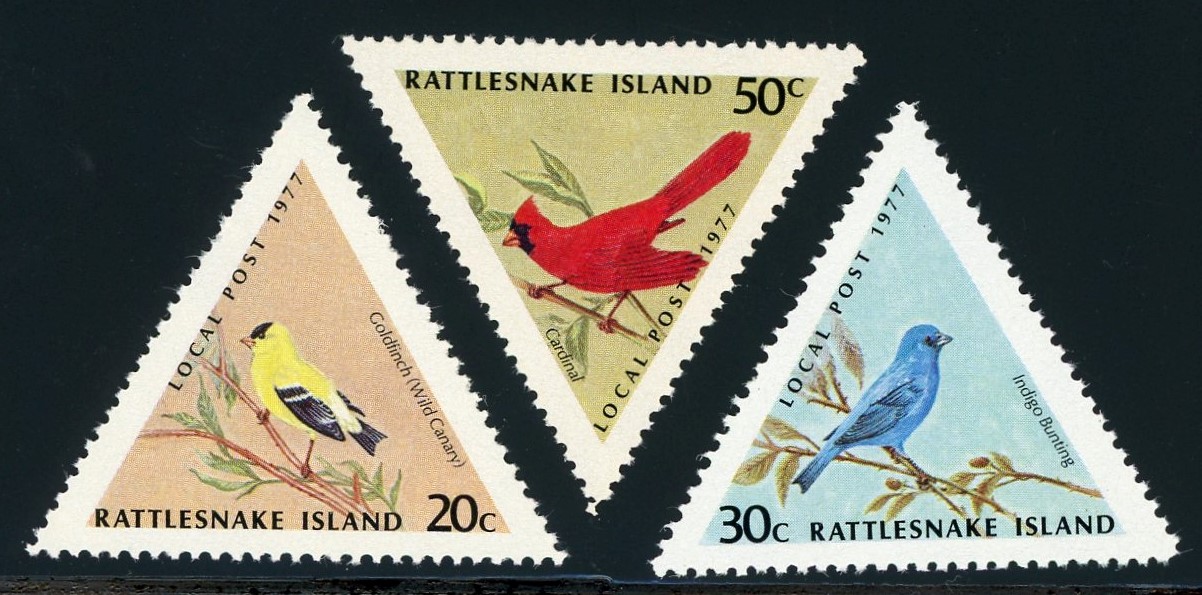
The 1977 set of three triangular-shaped stamps depicts an American goldfinch, a northern cardinal and an indigo bunting, birds commonly found on the island.
Kochan “I did it (entered) on my own because that was the only way you could become a stamp designer,” she said. “They (post office officials) really liked to commission stamps (from artists). Competitions were quite rare.”
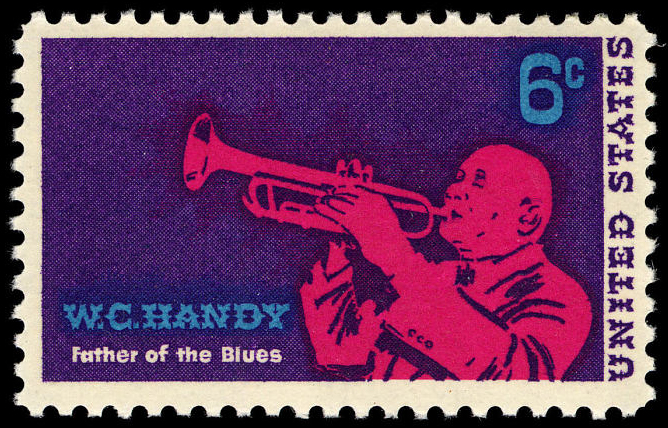
Kochan’s two stamps were for W.C. Handy, widely recognized as “Father of the Blues,” and the sesquicentennial of the state of Alabama. The Handy stamp was issued on May 17 and the Alabama stamp was issued less than three months later on Aug. 2.
At the time, Kochan was the second woman to have designed two commemorative stamps and the only woman to have her work featured on two stamps issued in the same year. Her first competition was through the Memphis Sesquicentennial, Inc. the organization planning events around the city’s 150th anniversary.
Her work featured Handy playing a trumpet. He is highlighted in bright magenta against a deep violet background with blue text. Kochan said she chose the colors “because he would be like in a spotlight performing.”
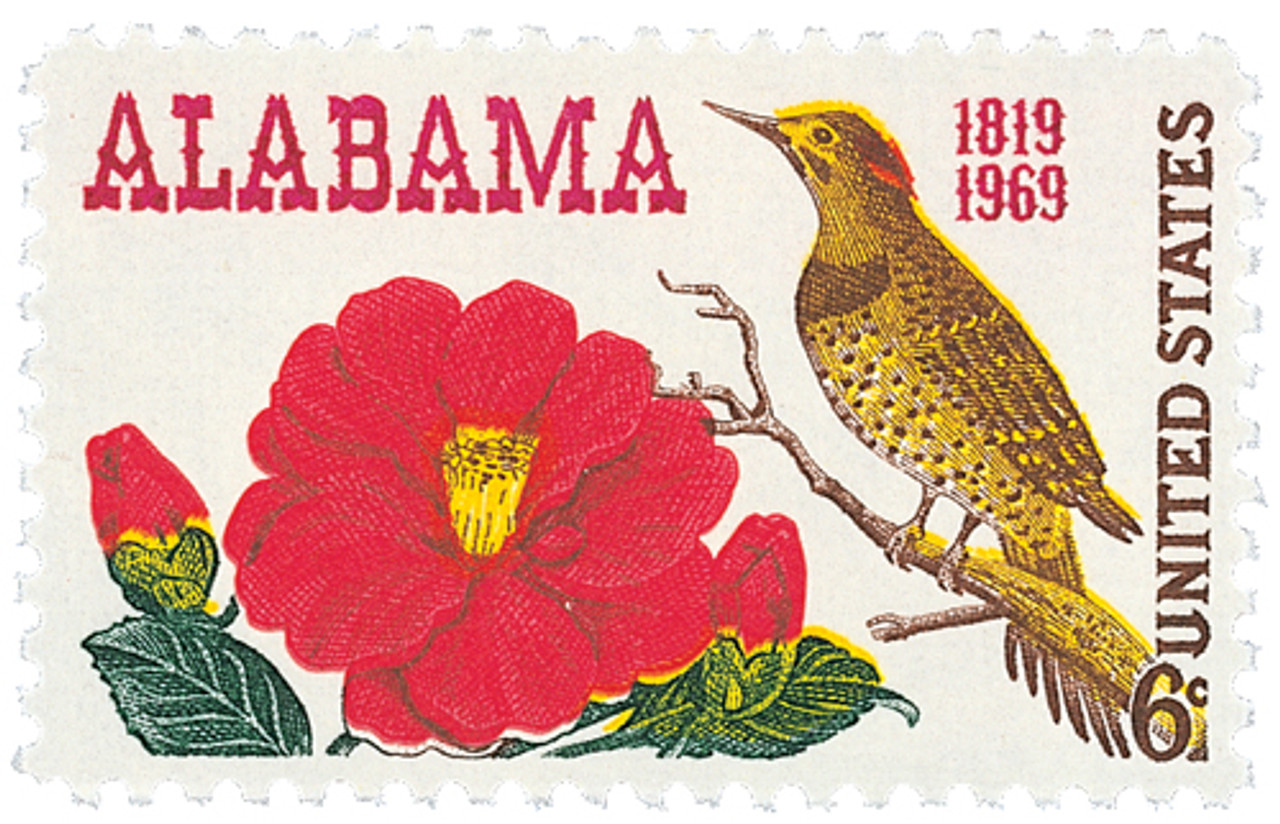
The Alabama stamp features a red camellia, the state flower, and a yellowhammer, or yellow-shafted flicker, the state bird.
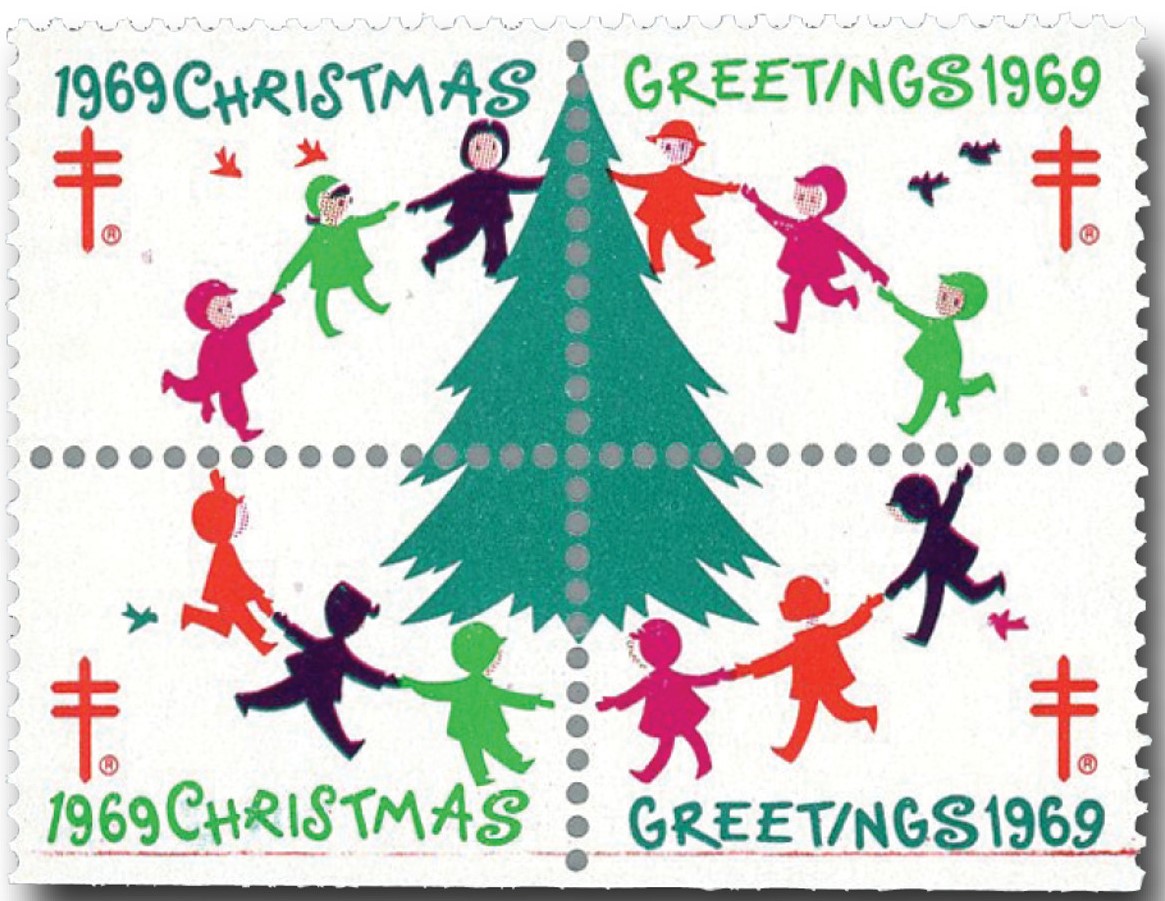
The 1969 Christmas seals were chosen two years earlier in a competition sponsored by the American Lung Association. Her design of a block of four seals shows children dancing around a Christmas tree.
Kochan credits Louisa Schmidt, a teacher at Thomas Jefferson Junior High School in Cleveland, for encouraging her artistic creativity.
“She was the one who said I have some talent and should pursue it,” Kochan remembered. “I never knew how broad of a field art was. There were so many various ways you could go.”
As a professional artist she became familiar with the work of Lorain native Stevan Dohanos, a well-known illustrator whose work had been featured on the cover of the “Saturday Evening Post.” Dohanos also designed several stamps throughout his long career and was a member of the post office’s Citizens Stamp Advisory Committee, which advises the postmaster general about stamp subjects and designs.
She subsequently met Dohanos through his cousin, who commuted from Lorain to the same art studio at which Kochan worked in Cleveland. Kochan said she left the studio to pursue work as a freelance artist after receiving “so many telephone calls for interviews and photos that I felt I was not being fair to my employer and fellow employees.” She rented space in the Colonial Arcade.
“I was very lucky. I never had to look for jobs. They came to me,” Kochan said.
Her clients included the Northeast Ohio Heart Association, Greater Cleveland Bicentennial Commission and The City Club of Cleveland as well as philatelic groups who invited her to design cachets, or envelope art, for special events.
After the banner year of 1969 Kochan was in demand as a speaker. In 1972 while speaking at the Sandusky Stamp Club Kochan met Dallas Biechele, owner of Rattlesnake Island, a private refuge in the western basin of Lake Erie. A privately run local post flew mail between the island and the Ohio mainland. Beginning in 1966 the service issued its own local post stamps.
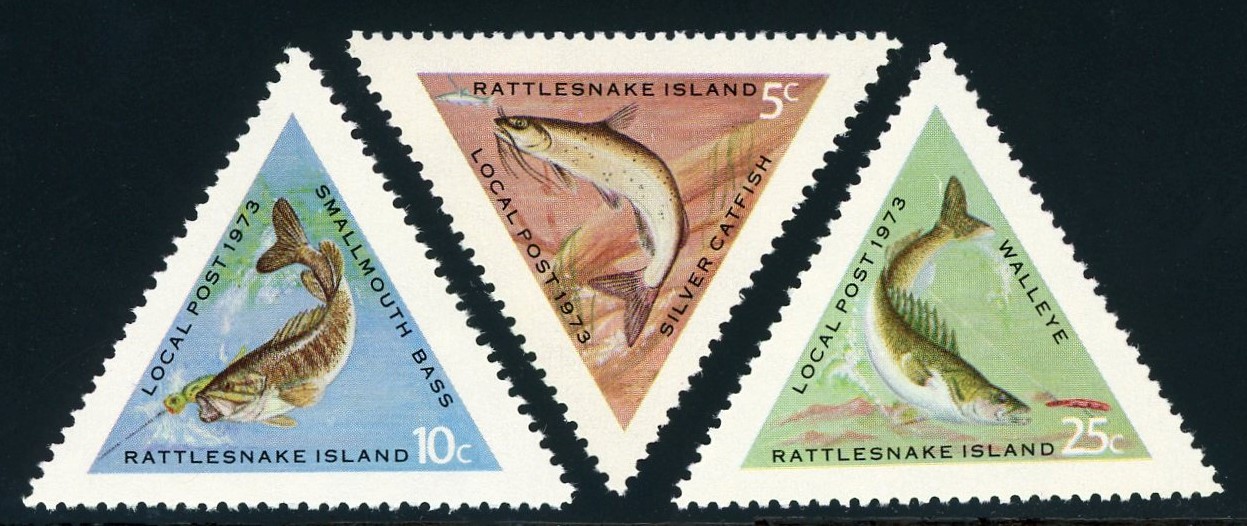
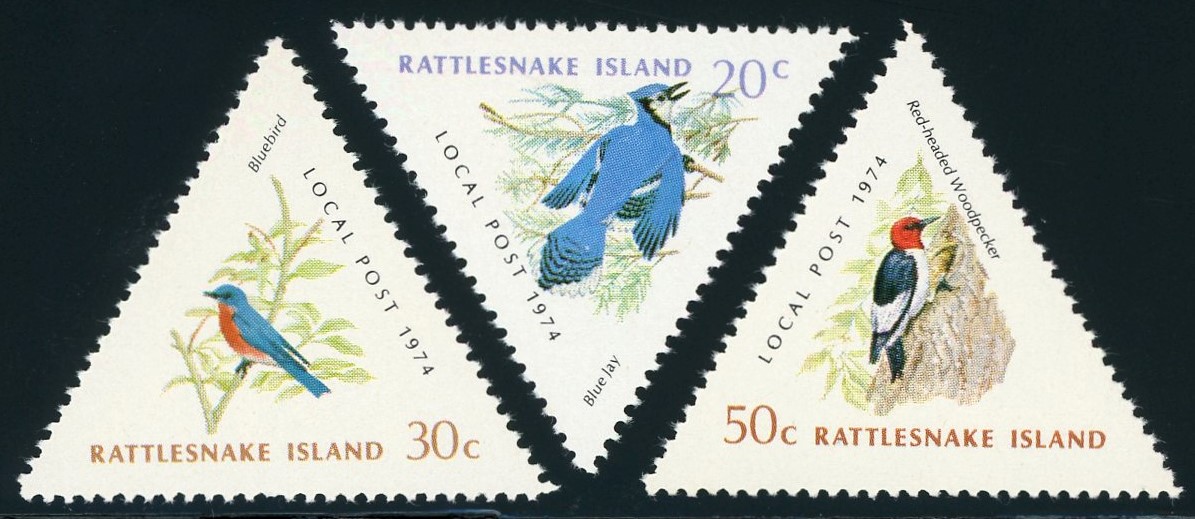
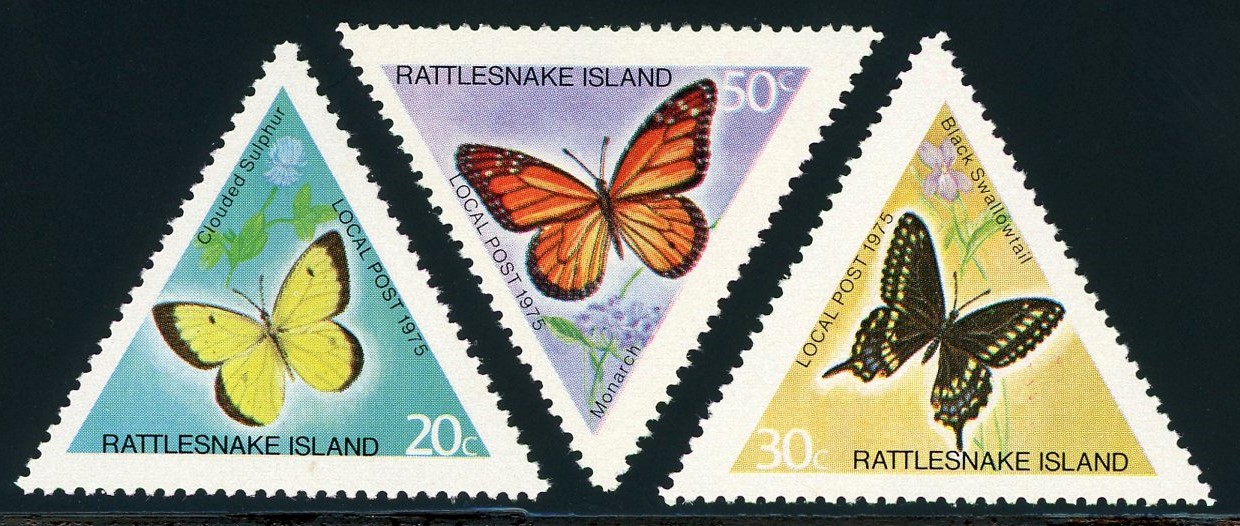
Biechele commissioned Kochan to design three triangle-shaped stamps annually from 1973 through 1977. Subjects featured local wildlife such as fish, birds and butterflies and the U.S. flag during the U.S. bicentennial. The stamps were available in various denominations.
Credit: COURTESY OF RATTLESNAKE ISLAND LOCAL POST
From 1973 through 1977 Cleveland artist Bernice Kochan designed stamps for
Rattlesnake Island Local Post operating in Northwest Ohio. They featured various forms
of wildlife found on and around the small island. The 1976 set marked the bicentennial
of the United States.
The stamps remain available through the Rattlesnake Island Local Post website at www.rilp.org.
The Cleveland Zoo initiated a short-lived local post that carried mail through the zoological park by sled dogs and commissioned Kochan for stamp designs in 1975 and 1976. Her first set in denominations of 3 cents, 5 cents and 10 cents featured, respectively, an elephant tortoise, Balto, a Siberian husky who led the final leg of the 1925 serum run to Nome Alaska during a blizzard, and king penguins. The second set showed an American alligator, a bald eagle and an American bison.
Her accomplishments led to Kochan’s induction into the Ohio Women’s Hall of Fame in 1979.
Although she retired in 1989, Kochan continues to create art showcasing Cleveland landmarks. In a different vein, in 2022 she published a book for children, “How Santa Became a Toymaker.”
Sadowski can be reached at sadowsk.dennis@gmail.com.